215 Lawson Rd, Badgerys Creek NSW 2555


Share
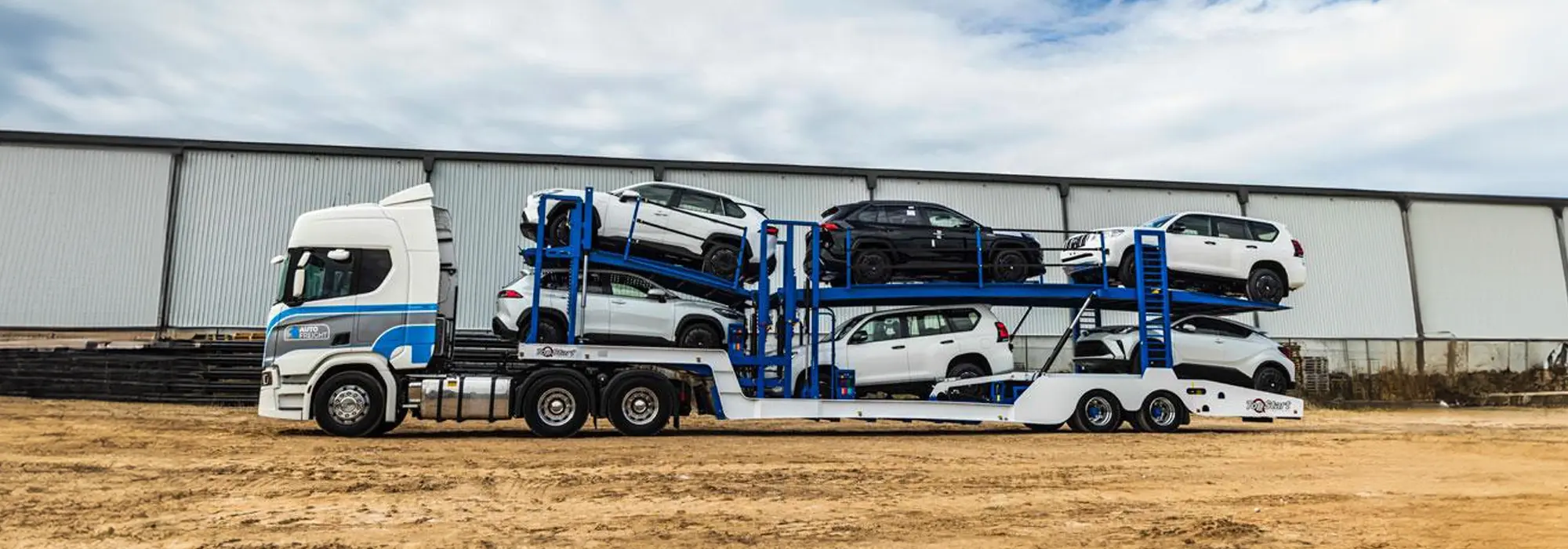
When it comes to car transport, ensuring the safe and efficient delivery of vehicles is paramount. One often overlooked yet critical aspect of this process is load distribution on multiple-car trailer trucks. Properly distributing the weight of the vehicles on the trailer not only enhances driver safety but also ensures the safety of the cars in transit. In this guide, we will delve into the art of car carrier weight distribution, emphasising its importance and detailing the correct methods for achieving it.
Why Load Distribution Matters
Cargo allocation is more than just arranging cars on a trailer; it’s about maintaining balance and stability throughout the journey. Here’s why it matters:
Stability: Correct cargo distribution helps prevent the trailer from swaying or fishtailing, ensuring a stable and controlled ride.
Safety: Balanced weight distribution reduces the risk of accidents, especially during sudden stops or sharp turns.
Vehicle Protection: Even weight distribution minimizes the chance of damage to the cars being transported, such as dents, scratches, or shifting during transit.`
Regulatory Compliance: Overloading or improper vehicle weight distribution can result in legal issues and fines, which can be costly for both drivers and carriers.
How to Properly Distribute Car Loads
Now that we understand why load distribution is vital, let’s explore the steps to do it correctly:
1. Weigh the Truck
Start by weighing the truck itself. Understand its empty axle weight. Most tractors have an empty weight ranging from 9 to 13 tons (18,000 to 26,000 pounds). Stinger-steered (a vehicle transporter configured as a semitrailer combination in which the fifth wheel is located as a drop frame just to the rear and below the rearmost axle of the power unit) vehicle transporters typically weigh around 17.5 tons (35,000 pounds). Tridems and multi-axle trailers will naturally be heavier. Knowing your truck’s weight is the first step in achieving proper cargo balance.
2. Determine the Tongue Weight
The tongue weight refers to the downward force exerted on the hitch ball of the trailer. Ideally, it should be 10 to 15 per cent of the overall trailer weight. This weight distribution ensures that there is a constant downward force on the vehicle, helping to maintain stability during the car transport service. If the load isn’t balanced correctly, the trailer’s tongue is likely to sag, which can lead to unsafe driving conditions.
3. Load Heavy Items First
When loading the cars onto the trailer, begin with the heavier vehicles. These should be placed securely in the trailer bed and distributed so that roughly 60% of the weight is in the front half of the trailer. The key here is to position the heavy cargo in the centre of the trailer, just forward of the axle. This creates a balanced car weight distribution, preventing the trailer from becoming too front- or rear-heavy.
4. Secure Your Cargo
After loading your trailer with different sized vehicles, it’s crucial to secure them properly. Use high-quality tie-down straps to secure the cars to the trailer’s tie-down anchors. Whether you opt for ropes, chains, or ratchet straps, the goal is to ensure that each item is firmly tied down and won’t come loose during towing. Loose cargo can not only cause damage but also pose a danger to other drivers on the road.

5. Avoid Overloading
Before you embark on the journey, always check the weight limits of your trailer. Overloading is not only unsafe but can also lead to legal consequences. To determine your trailer’s capacity, you need to know its Gross Vehicle Weight Rating (GVWR), total trailer weight, and Gross Axle Weight Rating (GAWR), found in the vehicle’s and trailer’s owner manual. Exceeding these weight limits can jeopardise your safety, the safety of your cargo, and your legal standing.
In conclusion, mastering the art of car carrier load balancing is fundamental for a safe and efficient car transport journey. By following these simple yet crucial steps, you can not only protect the vehicles you’re transporting but also ensure a smoother, more stable ride, all while keeping safety and compliance at the forefront of every car carrier’s mind. Whether you’re transporting a single sedan or a car transport company transporting a fleet of vehicles, weight allocation is your key to a successful journey. Drive safely to ensure successful vehicle shipping and that every vehicle reaches its destination in the best possible condition.
06.11.2023
Also from our blog

Handing over the keys to your beloved car and entrusting it to someone else can make you anxious for sure,...
- 28 Mar 2024
- View More
Just-in-Time (JIT) is a production and inventory management strategy where goods and materials are produced and received only when needed....
- 07 Dec 2023
- View More

When it comes to car transport, ensuring the safe and efficient delivery of vehicles is paramount. One often overlooked yet...
- 06 Nov 2023
- View More

In the bustling world of car transport, the safety of every vehicle shipping journey is paramount. Car carrier drivers play...
- 18 Sep 2023
- View More
When it comes to transporting your cherished vehicle, selecting the perfect car transport service is of utmost importance. The entire...
- 17 Aug 2023
- View More

At Auto Freight, we’re committed to providing the highest value and care for our customers and their vehicles. As such,...
- 04 May 2023
- View More